
Essential Tips for Effective Website Analysis
Understanding Website Analysis
Website analysis is a cornerstone of digital marketing that helps businesses identify strengths and weaknesses in their online presence. By leveraging tools and techniques to assess your website's performance, you can enhance user experience, improve SEO, and ultimately drive growth. This post will delve into essential tips that will help you conduct an effective website analysis.
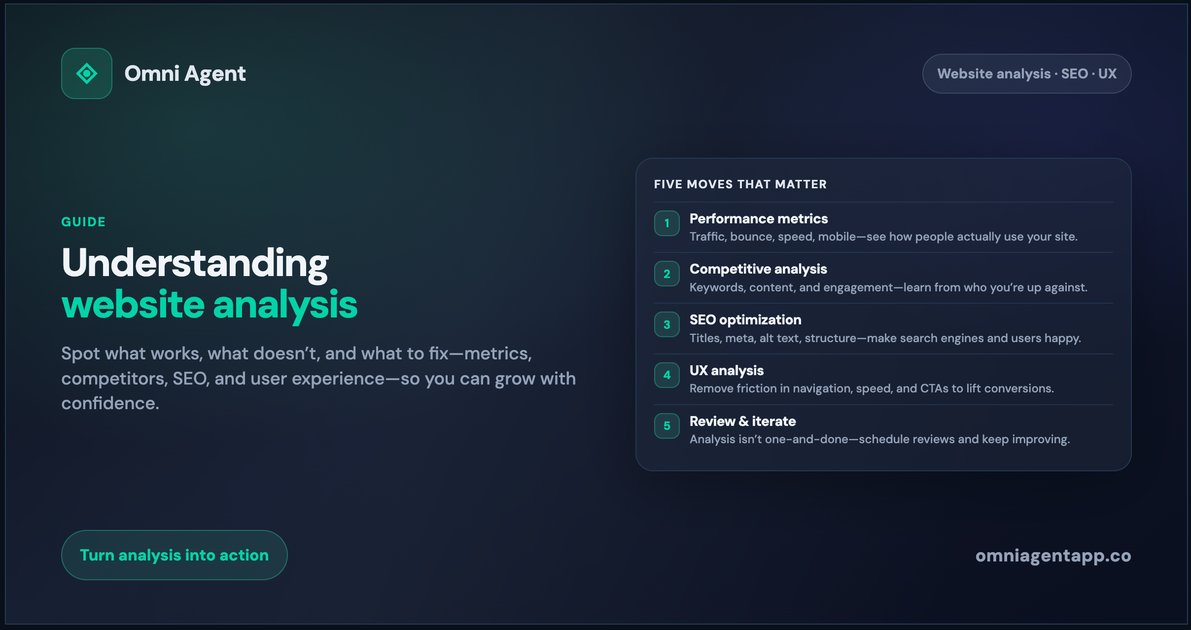
1. Evaluate Your Website’s Performance Metrics
The first step in website analysis is to gather performance metrics. Use tools like Google Analytics to track important data such as page views, bounce rates, average session duration, and conversion rates. Understanding these metrics provides insight into how users interact with your website and highlights areas that may require improvement.
Key Metrics to Monitor
- Traffic Sources: Identify where your visitors are coming from—organic search, direct visits, referrals, or social media.
- Page Speed: Ensure your website loads quickly, as speed directly impacts user experience and SEO ranking.
- Mobile Responsiveness: Verify that your site is optimized for mobile devices, as an increasing number of users access the web through smartphones.
2. Conduct a Competitive Analysis
Understanding your competitors is essential for positioning your brand effectively. Analyze their websites to identify what they are doing well and where they may be lacking. Tools like SEMrush and Ahrefs can provide valuable insights into your competitors' traffic sources, keywords, and backlink profiles. This information can help you refine your own strategy and identify opportunities for growth.
What to Look For
- Keyword Strategies: Determine which keywords are driving traffic to your competitors and consider how you can incorporate similar strategies.
- Content Quality: Assess the quality and relevance of the content available on competitor sites to benchmark your own content.
- User Engagement: Analyze how competitors engage users through comments, social sharing, and call-to-action strategies.
3. Optimize for SEO
Search engine optimization (SEO) is a crucial component of website analysis. Ensure that your website follows best practices to improve its visibility on search engines. Start with keyword optimization, ensuring that relevant keywords are strategically placed in titles, headings, and throughout your content. Additionally, focus on technical SEO aspects, such as optimizing meta tags, alt texts for images, and ensuring proper URL structures.
SEO Tools to Consider
- Google Search Console: Monitor your site's performance, fix indexing issues, and understand how your site appears in search results.
- Yoast SEO: If you're using WordPress, this plugin can help you optimize your content effectively.
- Ahrefs: Use this tool to analyze your backlinks and find opportunities for building a stronger link profile.
4. User Experience (UX) Analysis
User experience plays a vital role in retaining visitors and converting them into customers. Conduct surveys or utilize heatmap tools to understand how users navigate your site. Look for areas where users may be experiencing friction, such as complicated navigation, slow load times, or unclear calls to action. Addressing these issues can significantly enhance user satisfaction and drive conversions.
5. Regular Review and Iteration
Website analysis is not a one-time task; it should be an ongoing process. Set regular intervals to review your website's performance and adjust your strategies accordingly. By staying proactive and responsive to changes in user behavior and market conditions, you can maintain a competitive edge and ensure sustained growth for your brand.
By following these tips for effective website analysis, you'll be well on your way to optimizing your online presence, improving user engagement, and driving brand growth. Remember to utilize the right tools and remain vigilant in monitoring your website's performance over time.
Related posts
- Streamline Your Content Planning with OmniAgent's ToolsAug 18, 2026
- Transform Your Growth Strategy with OmniAgent's All-in-One SolutionAug 17, 2026
- Elevate Your Brand with OmniAgent's Comprehensive SEO ToolsAug 16, 2026
- Unlocking Market Edge with OmniAgent's Competitor Analysis ToolsAug 15, 2026
- Maximize Your Growth with OmniAgent's Comprehensive Analytics ToolsAug 14, 2026